Journal
Running a Live Merch Station Outdoors: Heat, Wind, Power and Dust
Sun, wind, humidity and improvised power all push on the same three things -- cure quality, throughput, and whether the line stays fun.
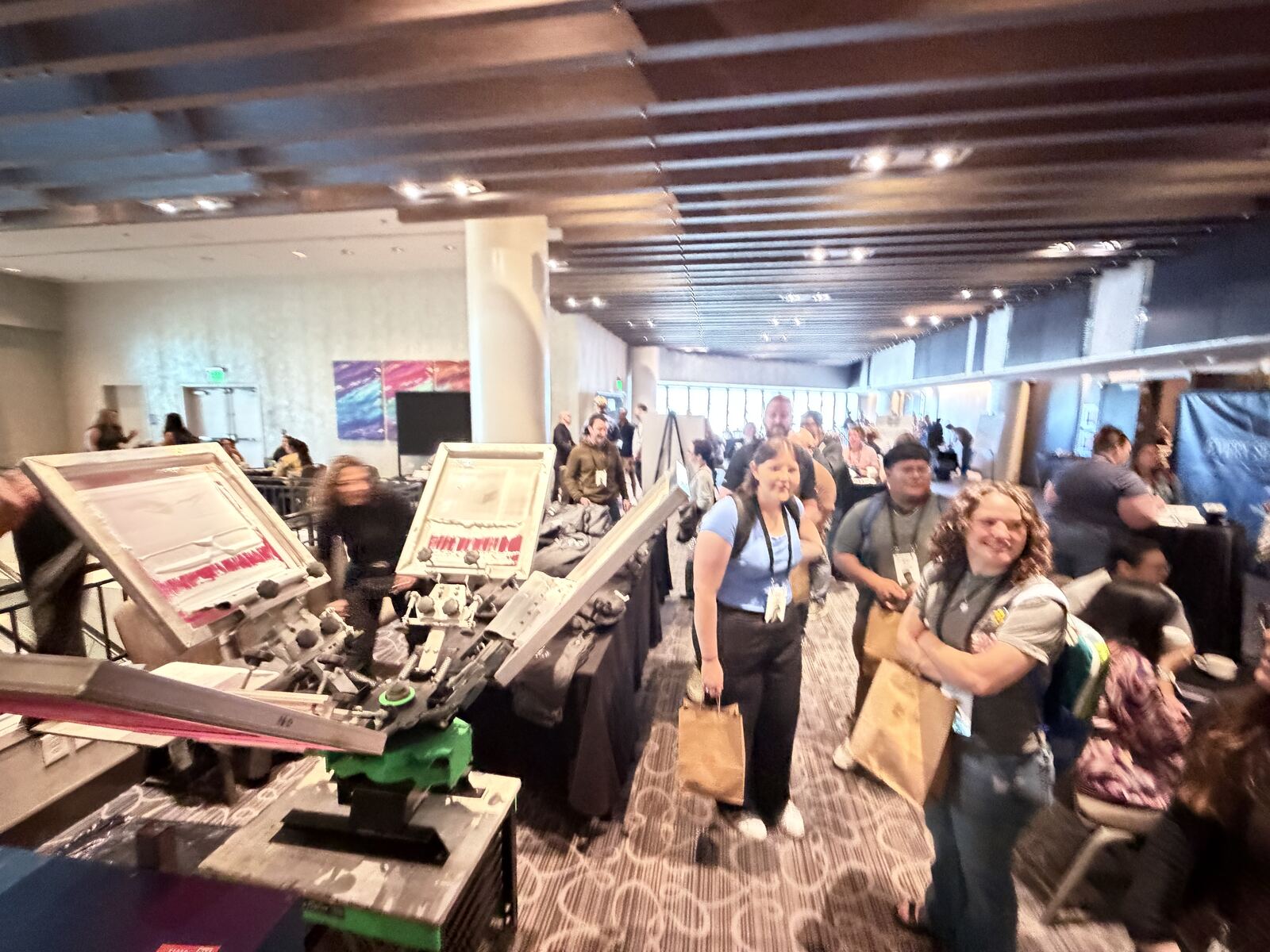
Indoors, a live merch station is a solved problem. Outdoors it becomes a weather system with a heat press in the middle of it. Sun, wind, humidity, dust and whatever power you can scrounge all push on the same three things — cure quality, throughput, and whether the line stays fun. Here is how the Merch Troop crew sets up an outdoor station so none of that shows up in the finished garment.
Heat: the press is not the only thing that gets hot
A heat press holds its platen temperature by cycling power, and it does that job in the shade about as well as it does it indoors. What actually degrades in direct sun is everything around it. Transfer film left on a table in full sun softens and curls before it reaches the shirt. Stacked blanks absorb heat and change how they take a press. Vinyl and adhesive-backed materials get tacky. And the operator, standing over a 320-degree platen in August, slows down, which is the part nobody budgets for.
The fixes are unglamorous and they work: put the press under solid cover rather than a mesh or open canopy, keep transfers and film in a closed bin out of the sun until the moment of use, and stage garments in covered totes instead of open stacks. If the forecast is above 90, we plan operator rotation into the staffing so the person at the press changes every hour or so. A tired operator is a slow operator, and slow is what kills an outdoor line.
Wind: the variable that ruins otherwise good plans
Wind is the single most underestimated factor at outdoor events. A 10x10 canopy is a sail. Unweighted, it does not blow over gradually — it leaves.
Every leg gets weight, every time, even on a calm forecast, and the weight goes on the leg rather than clipped to the frame. Sidewalls on the windward side do double duty: they cut the gust load on the canopy and they stop dust from crossing the pressing surface. Light material needs to be captive — transfer sheets, parchment, design menus and price cards all belong in bins or under clips, not loose on a table. And the garment table sits downwind of the press, so nothing blows into a hot platen.
The rule we work to: if it can lift, it is weighted or it is in a bin. There is no third option outdoors.
Power: the number to ask for, and what usually goes wrong
A single live station generally wants two dedicated 120V/20A circuits — one for the press and dryer, one for the heat press and station lighting. Outdoors, that power comes from one of three places, and each fails differently.
- Venue distro. The best case. Confirm it is dedicated, not shared with the food vendor running two fryers next to you. Shared circuits are the most common cause of a mid-event trip.
- Generator. Reliable and portable. Size it with headroom above the nameplate draw, because a heat press pulls hardest at the moment it cycles on. Quiet inverter units matter if you are anywhere near a stage or a speaking program.
- Extension runs from a building. The most fragile option. Long runs on undersized cord drop voltage, and a heat press on low voltage under-cures without ever telling you. If a run is unavoidable, go heavier gauge than feels necessary and keep it as short as possible.
Two habits prevent most outdoor power incidents: cover and mat every cable crossing a walking path, and know before doors which breaker feeds you and where it lives. Finding that out during a line is not a good use of anyone's evening.
Dust, humidity and the ground itself
Adhesion is a surface problem. Dust and pollen on a garment can compromise a transfer bond, and outdoor sites deliver both for free — especially at fairgrounds, festival fields and anything on gravel or dirt. Blanks stay in sealed totes until they are pressed, the pressing surface gets wiped between runs, and finished pieces go into bags rather than an open stack.
Humidity affects cure and dry times. Damp air means more moisture in the fabric, which means a shirt that would be done in seconds indoors needs a little longer outdoors. That is throughput, not quality, as long as you actually adjust for it rather than assuming the indoor timing holds.
The ground matters too. Grass and dirt are hard on wheeled cases and worse for finished garments. We plan a hard staging surface — pallets, mats or a truck tailgate — and keep a clear path between the press and the handoff point so a printed shirt never touches the ground on the way to its owner.
What to change about the menu outdoors
Outdoor crowds move differently. Attention is shorter, sightlines are longer, and the decision happens further from the table than it does inside. Two adjustments make an outdoor station noticeably faster: print the design menu large enough to read from the back of the queue, so people arrive having already decided; and cut the option count by one or two versus what you would run indoors. Sun, noise and standing all shorten patience.
It is also worth choosing garment colors with the light in mind. Bright ink on light garments photographs beautifully in daylight and turns to mud under colored stage lighting after dark, so an evening outdoor event and a midday one deserve different palettes even for the same client.
Frequently asked questions
What happens if it rains?
A covered station with sidewalls keeps running through light rain. What we will not do is run electrical equipment in standing water or in a canopy taking wind-driven rain from the side. We build a call time into the plan with the event lead — a point at which we either move indoors, pause, or wrap — so the decision is made ahead of time instead of in the middle of a downpour.
Does printing slow down in heat?
The equipment holds up fine. The throughput drop comes from people — operators tire faster and guests linger less — and from the extra handling required to keep materials shaded and clean. Plan roughly 10 to 20 percent below your indoor pieces-per-hour figure for a hot outdoor day, and staff so the press operator can rotate.
Do you bring your own power and shade?
Yes. Canopy, weights, sidewalls, cable protection and a quiet inverter generator sized to the station are all part of an outdoor setup. What we need from you is the footprint, vehicle access for load-in, and confirmation of any site rules about generators and staking.
Planning an outdoor activation?
Send us the date, the site, guest count and what you want people walking away wearing. We will map the station, the power plan and the weather contingencies, and reply with a real recommendation within one business day. Call (562) 614-4800 or request a quote.
Request a live station quote
Bring the made-on-the-spot moment to your event.
Tell us the date, city, venue, guest count, and what you want guests to walk away wearing. We will map the right live custom station, crew, and product plan and reply within one business day.
Prefer to talk it through? Call (562) 614-4800.